
Test reliability and durability under extreme, rapid temperature changes — Subjects products and materials to instant transitions between hot and cold zones to expose weaknesses and ensure long-term performance.
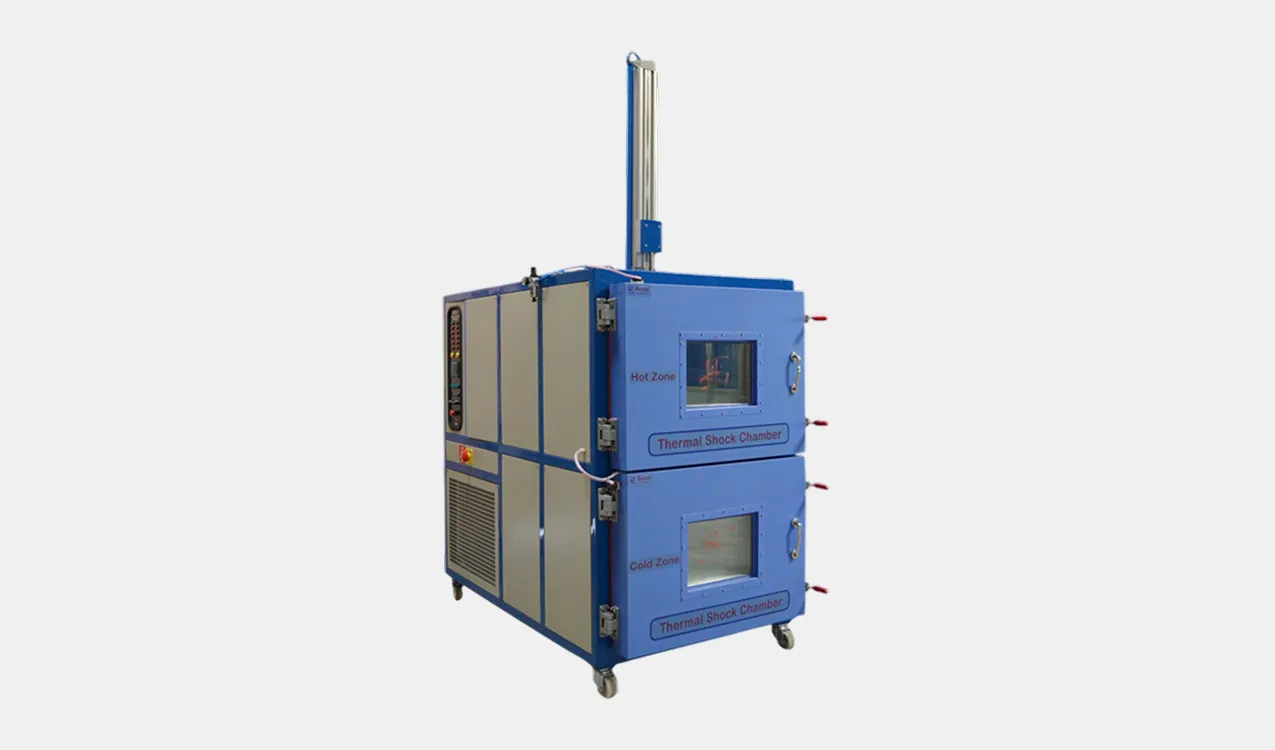
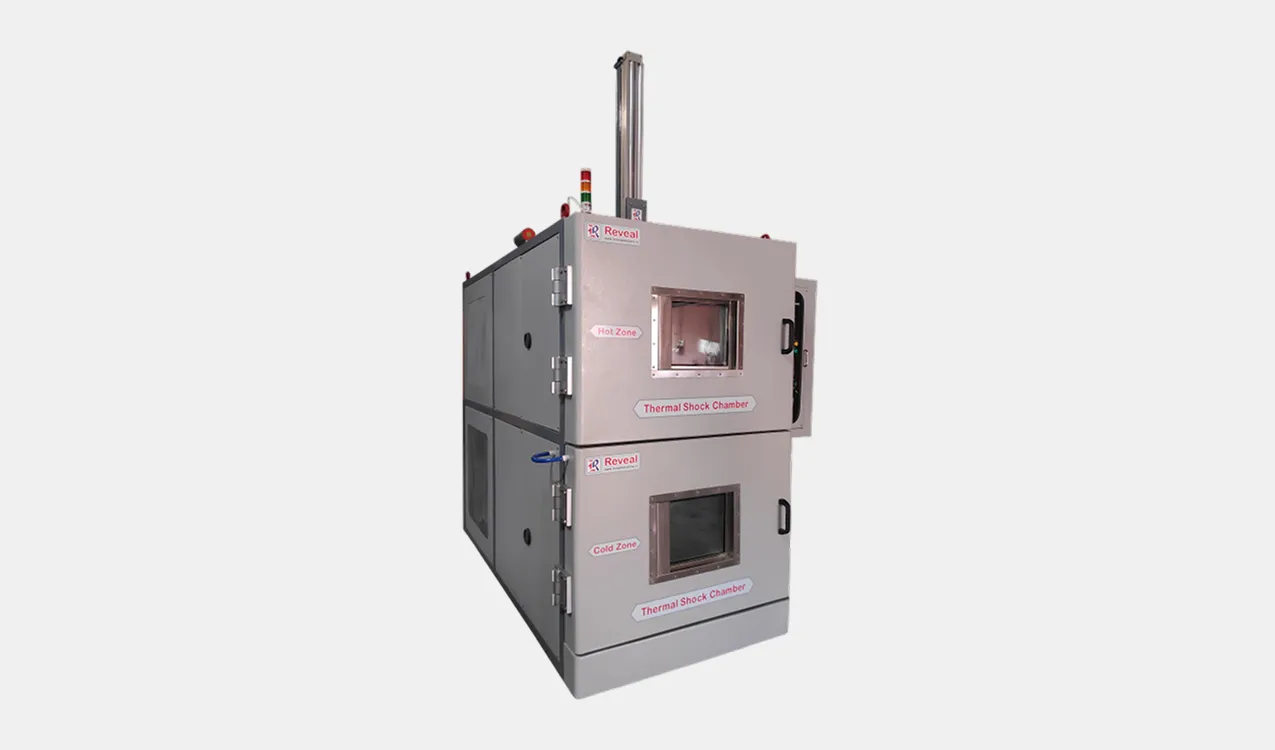
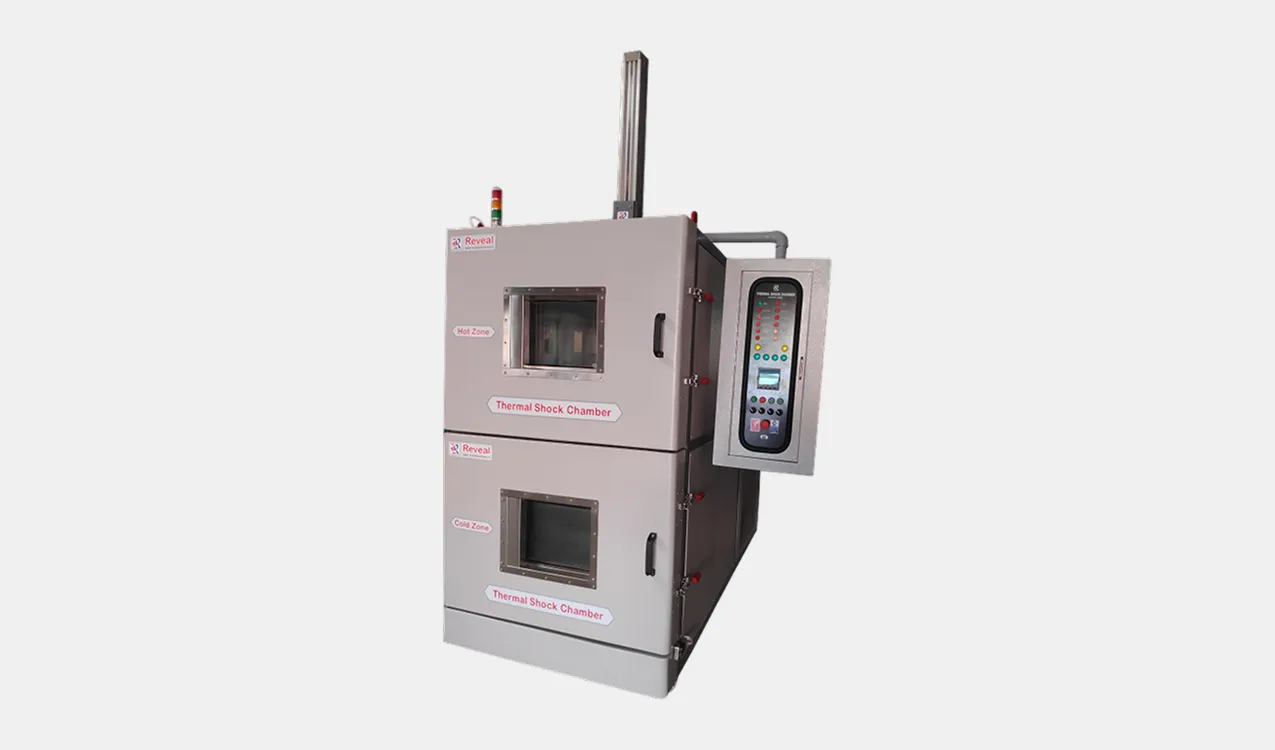
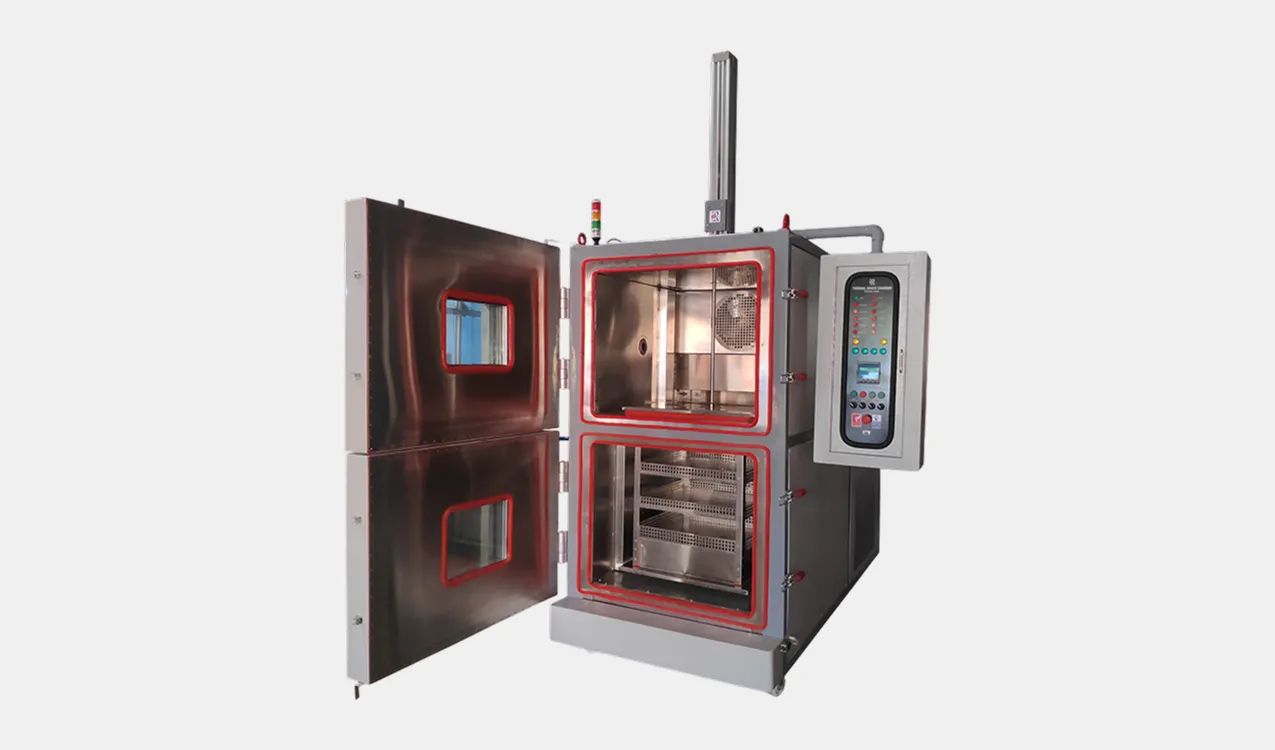
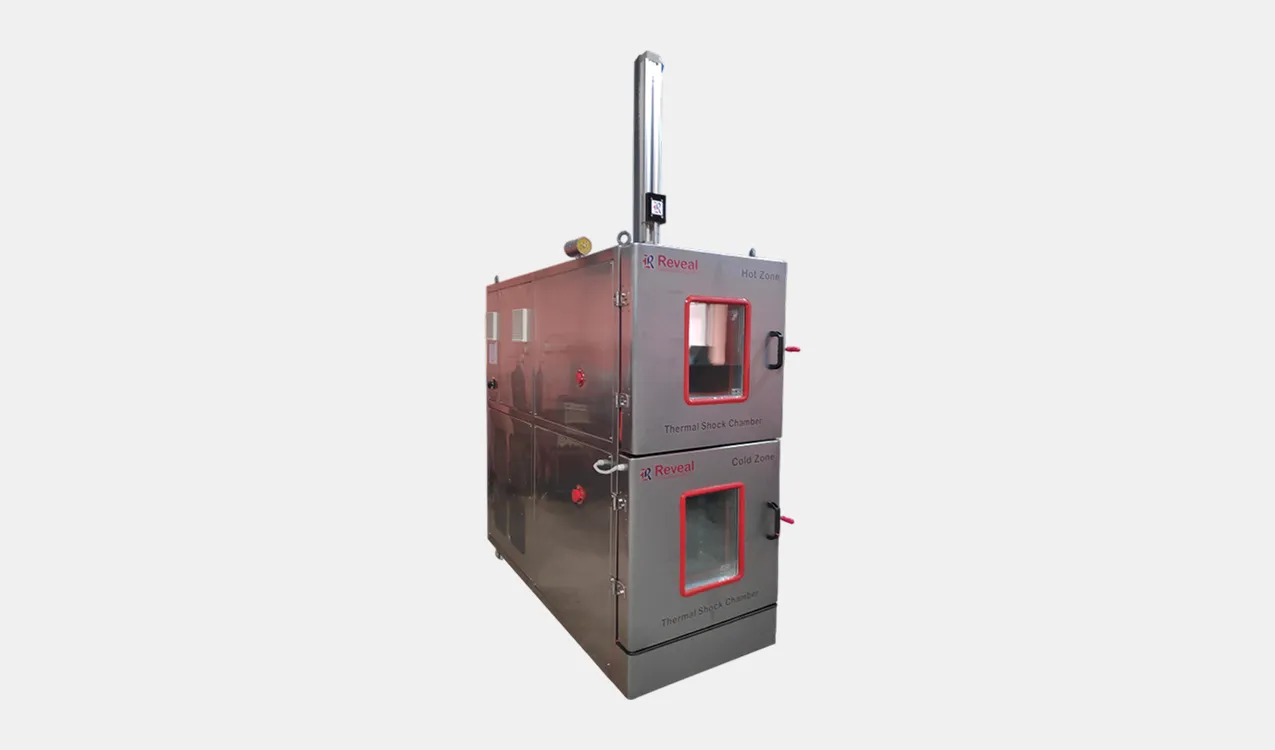
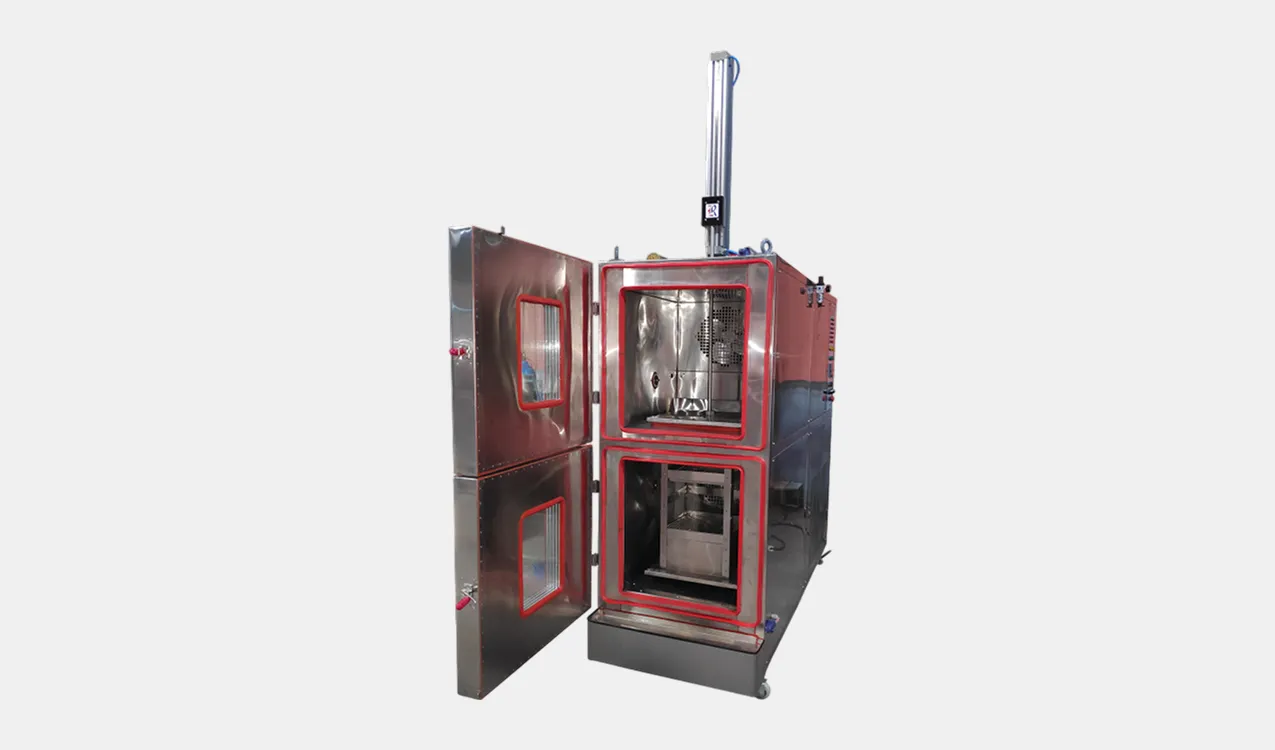
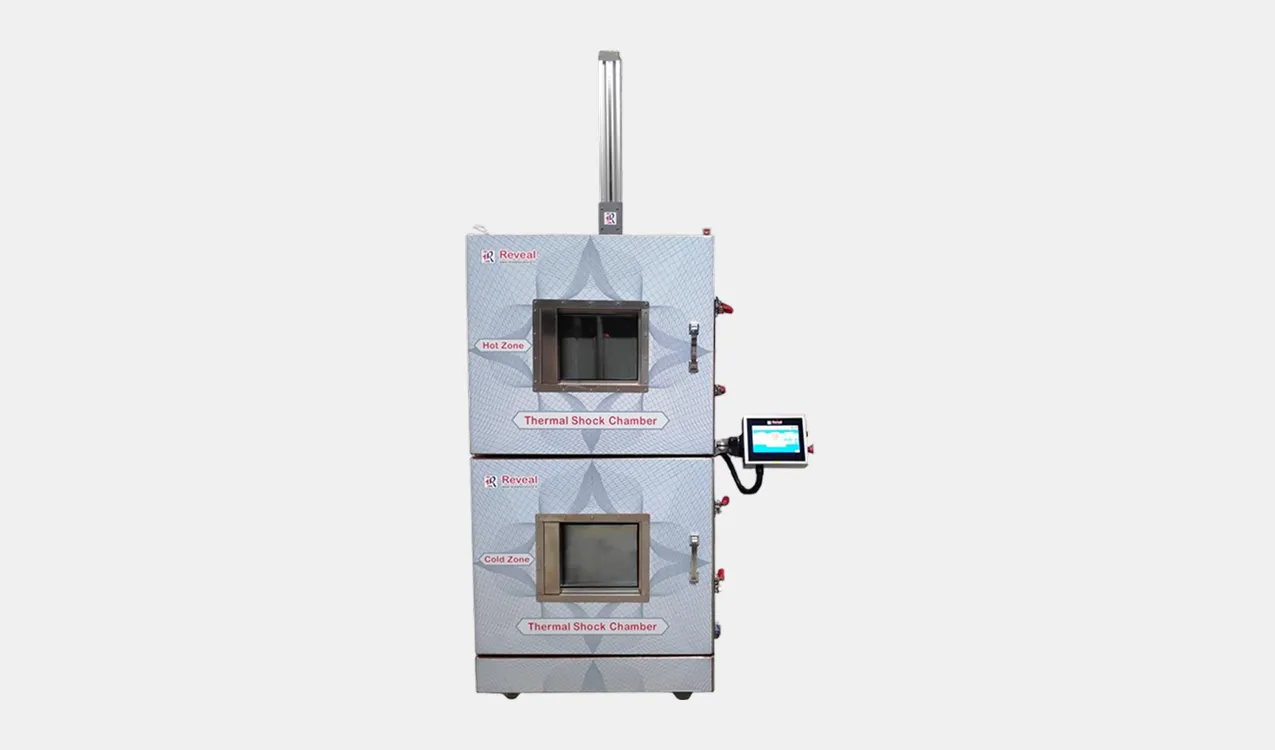
Thermal Shock Chambers are specialized environmental testing systems used to evaluate the reliability and durability of products and materials when subjected to extreme and rapid temperature changes. By instantly transferring specimens between a hot zone and a cold zone — with transition times under 10 seconds — these chambers replicate the severe thermal stress that products may experience in real-world use, exposing material weaknesses, solder joint failures, and coating delamination before they reach the field.
| Model | Basket Size W×D×H (mm) | Basket Size (inch) | Basket Volume | Hot Zone | Cold Zone | Transition Time | Recovery Time |
|---|---|---|---|---|---|---|---|
| TS-36 | 300×300×400 | 12×12×16 | 36L | Ambient to +220°C | Ambient to -70°C | <10 sec | 5–8 min |
| TS-65 | 400×400×400 | 16×16×16 | 65L | Ambient to +220°C | Ambient to -70°C | <10 sec | 5–8 min |
| TS-125 | 500×500×500 | 20×20×20 | 125L | Ambient to +220°C | Ambient to -70°C | <10 sec | 5–8 min |
| TS-210 | 600×600×600 | 24×24×24 | 210L | Ambient to +220°C | Ambient to -70°C | <10 sec | 5–8 min |
| TS-340 | 700×700×700 | 28×28×28 | 340L | Ambient to +220°C | Ambient to -70°C | <10 sec | 5–8 min |
| TS-1000 | 1000×1000×1000 | 39×39×39 | 1000L | Ambient to +220°C | Ambient to -70°C | <10 sec | 5–8 min |
Custom basket dimensions and temperature ranges available on request. Power supply: 415 VAC ±5%, 3-Phase, 50 Hz, 4-wire + Earth.
Rapid thermal cycling of PCBs, IC packages, solder joints, and connectors to detect cracking, delamination, and bond failures that occur under sudden temperature transitions during manufacture and field use.
Thermal shock evaluation of sensors, engine components, gaskets, and electronic control units to validate durability under the rapid temperature swings experienced during engine start-up, shutdown, and extreme climate driving.
Avionics reliability qualification and structural component assessment under simulated altitude and re-entry thermal extremes. Compliance testing to MIL-STD-810 and RTCA DO-160 for mission-critical hardware.
Durability validation of smartphones, wearables, tablets, and batteries under sudden thermal transitions experienced during everyday use, transport between climates, and drop in cold environments.
Thermal resistance and solder joint integrity verification of LED modules, drivers, and luminaires. Rapid temperature cycling identifies failures in thermal interface materials and die-attach bonds.
Thermal endurance and fatigue studies of metals, polymers, composites, and coatings. Determines coefficient of thermal expansion mismatches and evaluates adhesive and sealant performance under shock conditions.
Testing of brake systems, control modules, and signalling components under thermal shock profiles that replicate tunnel-to-open-air transitions and seasonal temperature extremes in rail and mass transit applications.
Production-line screening and batch qualification to detect latent defects introduced during manufacturing. Accelerated stress testing shortens product development cycles and improves first-pass quality rates.